Listen to a one-minute poem recorded just for you!
(a poem for younger kids is in the video below the first poem)
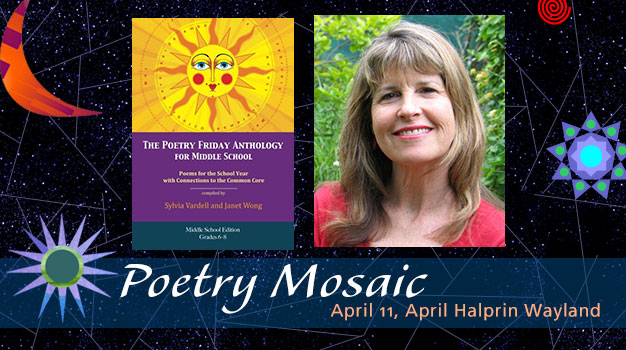
Click here to listen
IN THE WORD WOODS
by April Halprin Wayland
I’m sure there’s a found poem somewhere here.
There usually is this time of year.
Didn’t a red-haired boy lose words
that were found last May by a flightless bird?
And then that search and rescue hound
dug up sixteen poems he’d found.
Listen for falling bulletin boards,
and scowling poem-poaching hordes
who stomp all over this hallowed ground
until the hidden poems are found.
I’ll bring a flashlight, you bring a rake
we’ll get down on our knees and make
a poem from words that have trampolined
off an internet ad or a magazine
into the woods some starry night
waiting for searching kids who might
find a poem if they’re brave and follow
the hoot of an owl to the end of the hollow.
published in The Poetry Friday Anthology for Middle School–Poems for the School Year with Connections to the Common Core, compiled by Sylvia Vardell and Janet Wong (Pomelo Books 2013)
Copyright © 2017 April Halprin Wayland. Used by permission of the author, who controls all rights.
read “Counting Out Rhyme” by Mary Ann Hoberman (…watch to the very end!)
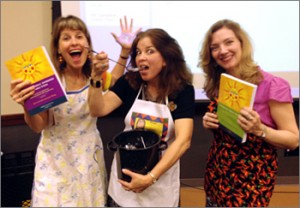
April Halprin Wayland, Robyn Hood Black, and Irene Latham cook up poetry from the Poetry Friday Anthologies
for a workshop at the Fay B. Kaigler Children’s Book Festival in Hattiesburg, Mississippi. (See Publishers Weekly)
What’s New with My Poetry (What’s new with My Books is here)
I am honored that one of my poems introduces the second edition of Sylvia Vardell‘s fabulous resource book, Poetry Aloud Here: Sharing Poetry with Children.
I am beyond proud that three of my poems appear on
Children’s Poet Laureate Kenn Nesbitt’s homepage ~
When Mom Plays Just for Me, Ice Cream Soup, and Winterku!
And I have poems in dozens of anthologies, including several poems in each of the MARVELOUS
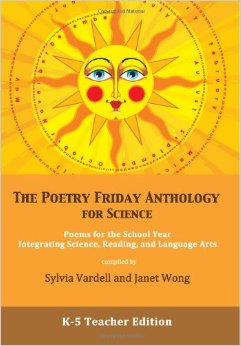
Poetry Friday Anthologies, (including The Poetry Friday Anthology for Science: Poems for the School Year Integrating Science, Reading, and Language)
- Poetry doesn’t have to rhyme.
- Anything in the world can be the subject of a poem.
- You can’t write a meaningful poem without feeling strongly about it.
- You don’t have to worry about spelling until after your poem is written and you want to share it.
- Poetry is more than a series of facts or statements.
- Word pictures are the art of poetry.
- Every word counts in poetry.
- Poetry is imagination and imagery.
- You can communicate an idea or feeling by comparing two things.
- Poetry is “the best choice of words.”
- Rhyme is a tool of poetry to be used properly, not artificially.
- Punctuation is for the purpose of making a poem easier to read.
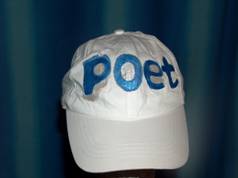
You, too, can make yourself a poet’s hat!
See also Myra’s marvelous book, POEM-MAKING.
This book is written for perhaps a ten-year-old reading level—perfect for me!
==============================================================
Here’s some background:
- I studied for over 12 years was the esteemed poet, Myra Cohn Livingston (an instructor in the UCLA Extension Writers’ Program for over 20 years)
- My poetry has been published in over 50 anthologies for children.
- I’m connected to the universe of children’s poets in the Kidlitosphere, and am particularly engaged in Poetry Friday
- I have published over 50 poems in Cricket Magazine, and was invited to write a poem for their anniversary issue.
- And as for my novel in poems for young teens, Girl Coming in for a Landing (Knopf):
* winner of the Myra Cohn Livingston Award for Best Poetry Book
* winner Penn State’s Lee Bennett Hopkins Honor Award for Poetry
* Junior Library Guild selection
* Nominated as a Best Book for Young Adults by the American Library
Association (ALA)
* Nominated for Quick Picks for Reluctant Readers by ALA
* Selected for the California Collections by California Reader